Marsquakes Reveal Hidden Ocean of Liquid Water Beneath Mars’ Surface
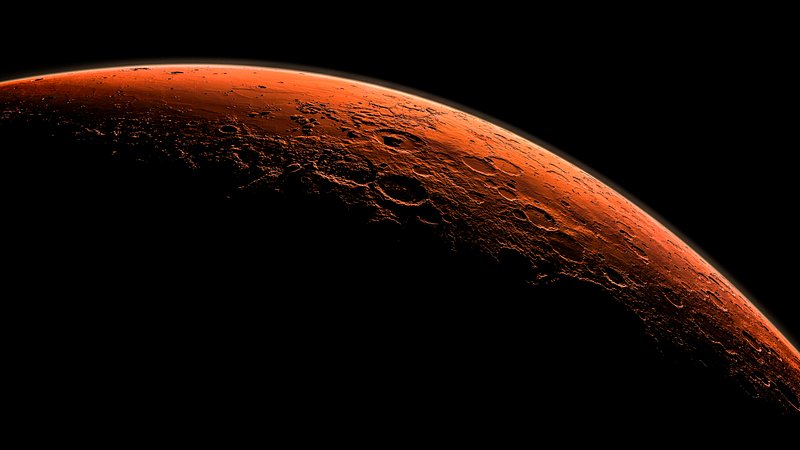
Image credit: NASA / GSFC SVS
New seismic readings from NASA’s InSight lander have uncovered the strongest evidence to date that Mars still harbours a vast reservoir of liquid water 5–8 km beneath its dusty surface. By analysing how shear-waves from large 2021–22 “marsquakes” slowed abruptly at those depths, geophysicists detected a sponge-like layer of porous rock saturated with water — the first direct seismic hint of an underground aquifer on the Red Planet.
The study, published in National Science Review, indicates that this wet layer could hold enough water to blanket Mars in a global ocean 520–780 m deep. That volume neatly fills the long-standing “missing-water” gap left after accounting for ice at the poles, hydrated minerals and atmospheric loss. The findings build on 2024 gravity-and-seismology work that first proposed oceans’ worth of groundwater deeper in the crust.
Liquid water is the key ingredient for life. On Earth, microbes thrive kilometres underground in similar watery fractures. If such habitats exist on Mars, they may preserve biosignatures — past or even present. Researchers caution that drilling to 5 km depth is well beyond current mission capability, yet the discovery pinpoints where future life-detection and resource-utilisation efforts should focus.
Although this aquifer would be challenging to tap for human explorers, its mere presence reshapes our picture of Mars as an active, water-rich world beneath a seemingly arid exterior. Scientists advocate deploying next-generation seismometers and electromagnetic sounders at multiple sites to map how widespread the reservoir is, and eventually sending deep-drilling or heat-probe missions to sample the water directly.
For now, every rumble that InSight recorded whispers the same message: Mars is not a desiccated husk but a planet still holding an ocean in exile — a discovery that energises the search for life and guides the roadmap for future exploration.