A Curated Showcase of Cosmic Structures Observed by NASA Telescopes
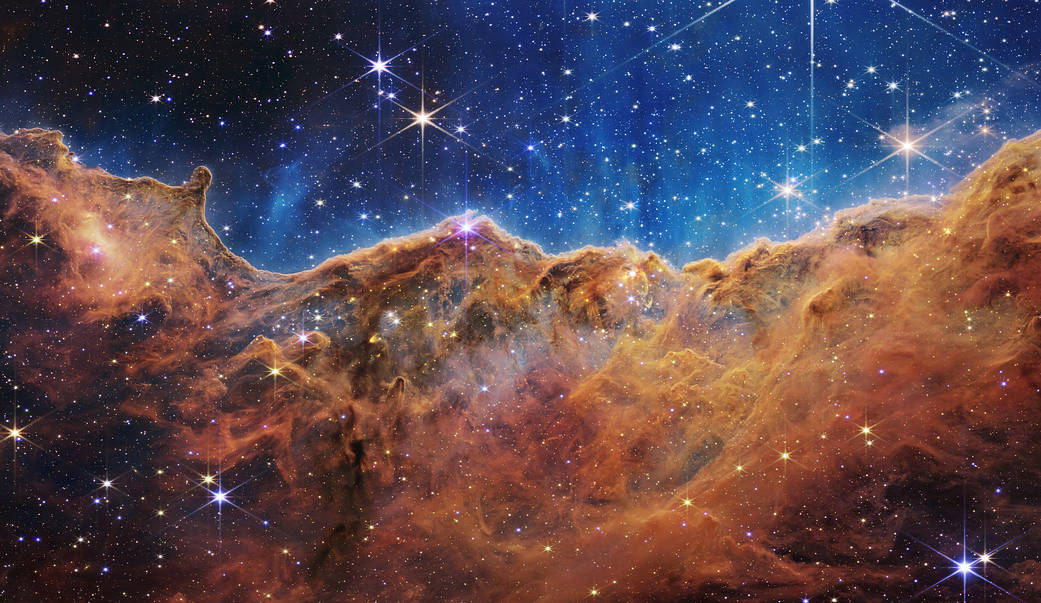
Image credit: NASA / GSFC SVS
Space telescopes have given us breathtaking views of the cosmos. NASA's Hubble Space Telescope and other missions continually capture colorful nebulae, colliding galaxies, and deep‐field vistas. These images reveal star nurseries, galactic structures, and far-off galaxies in unprecedented detail. Below are ten of the most visually striking NASA images, with simple descriptions, telescope credits, and links to full-resolution versions (where available). All information is drawn from NASA's official sources.
1. Pillars of Creation (Eagle Nebula, Hubble Space Telescope)
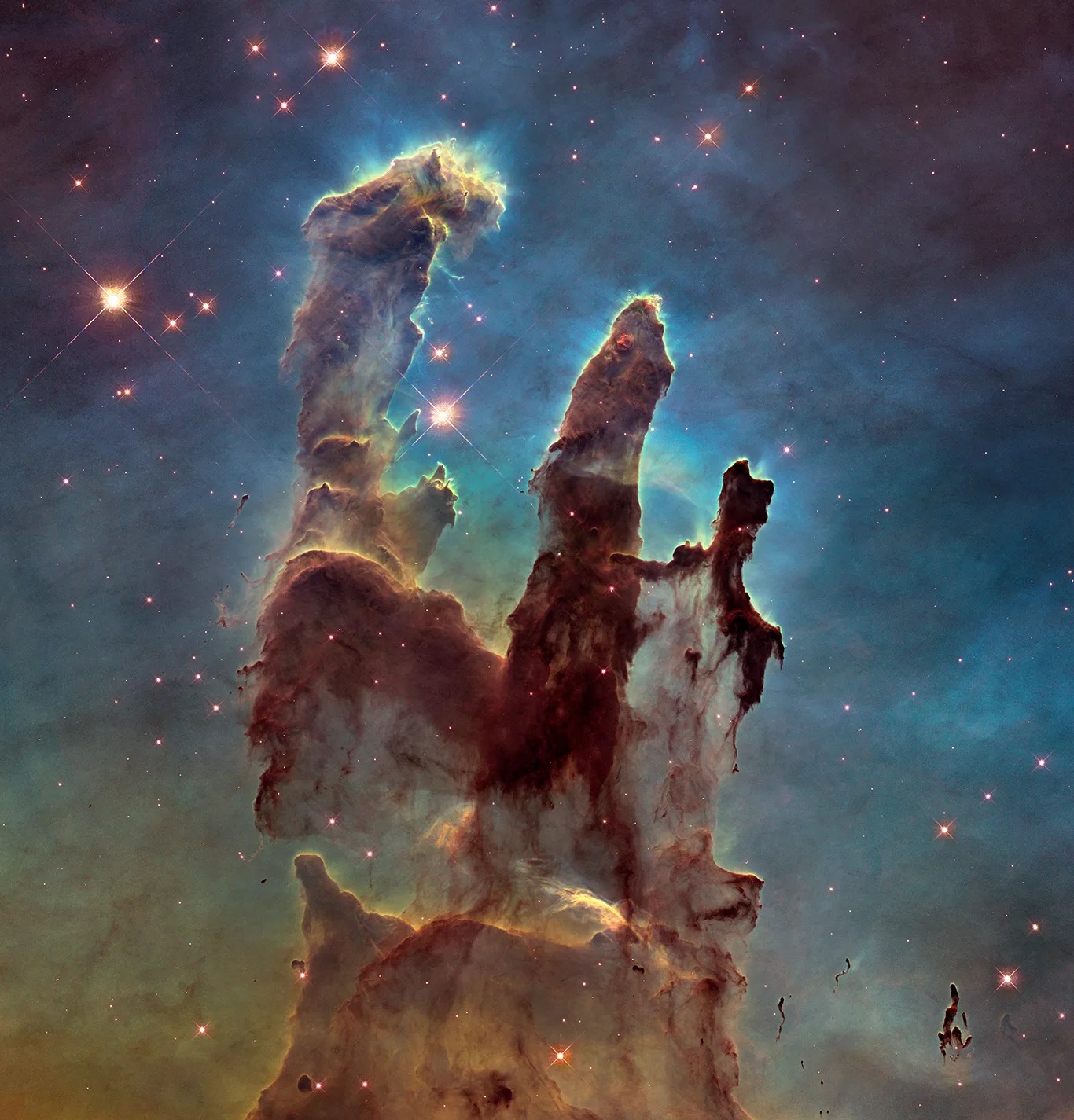
In this iconic Hubble image of the Eagle Nebula, towering columns of gas and dust form stellar "pillars." These misty spires, nicknamed the Pillars of Creation, are illuminated by young stars on their sides and host newborn stars at their tips. The haze is semi-transparent and constantly eroded by ultraviolet radiation from nearby massive stars.
Telescope: Hubble Space Telescope (HST).
Full-resolution image: Hubble Heritage Team archive.
Credit: NASA/ESA/Hubble Heritage Team (STScI/AURA)
2. Hubble Ultra Deep Field (Hubble Space Telescope)
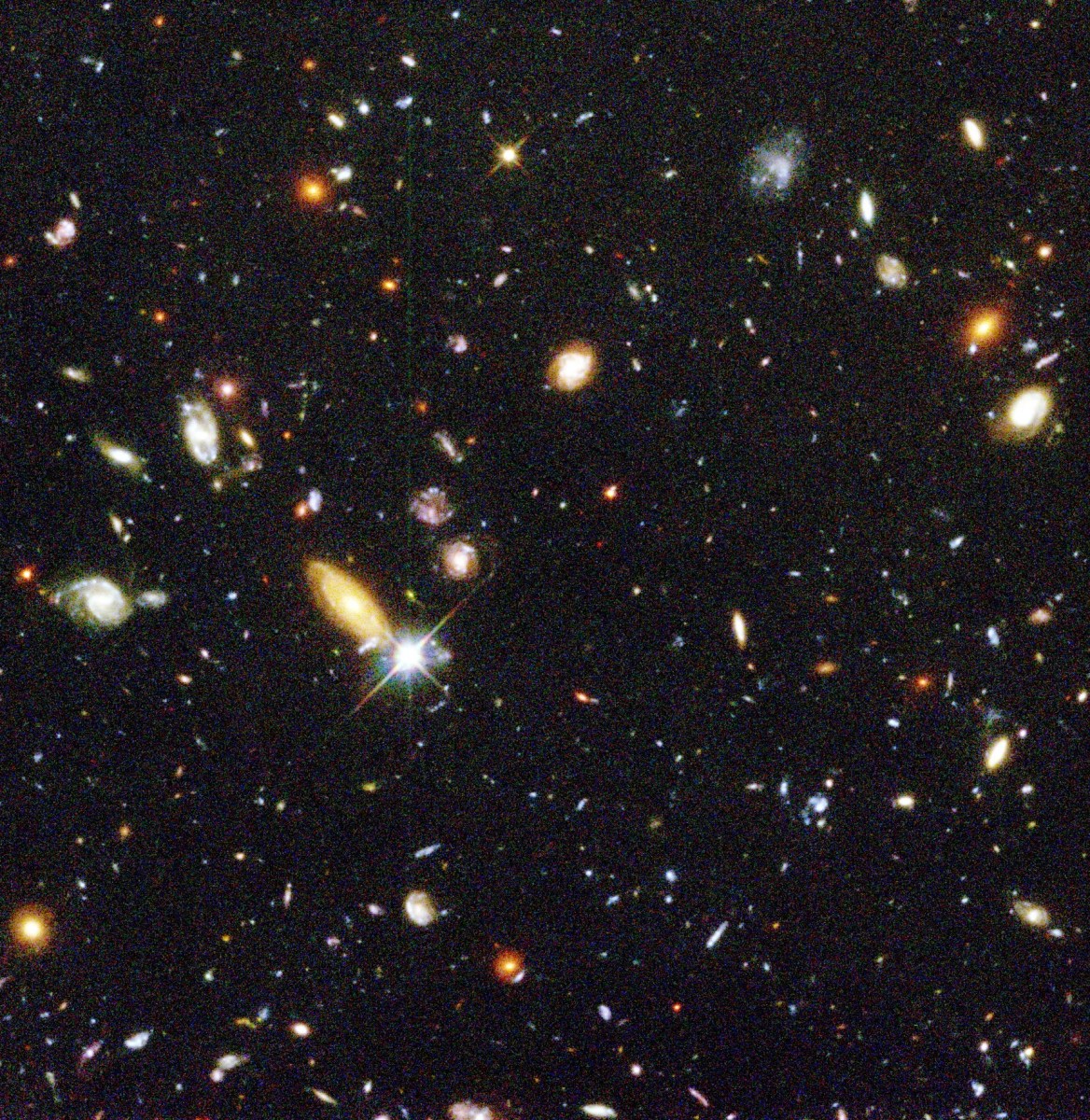
This deep Hubble image contains nearly 10,000 galaxies as faint smudges against the dark sky. Called the Ultra Deep Field, it represents a tiny sliver of sky with galaxies of various ages, shapes, and colors. The smallest, reddest galaxies are among the most distant, seen when the universe was just 800 million years old. This mosaic combines years of exposures to probe the early cosmos.
Telescope: Hubble Space Telescope (Advanced Camera for Surveys).
Full-resolution image: Hubble Heritage Team archive.
Credit: NASA/ESA/Hubble Team/STScI
3. "Cosmic Cliffs" in the Carina Nebula (James Webb Space Telescope)
This Webb Space Telescope image shows the edge of a young star-forming region (NGC 3324) in the Carina Nebula. The undulating "mountains" and "valleys" glow with infrared light, revealing stars and gas previously hidden by dust. Dubbed the Cosmic Cliffs, the peaks rise about 7 light-years high and are carved by ultraviolet winds from massive stars. Webb's NIRCam reveals hundreds of new stars and galaxies in this view.
Telescope: NASA/ESA/CSA James Webb Space Telescope (NIRCam).
Full-resolution image: Hubble Heritage Team archive (see download options).
Credit: NASA/ESA/CSA/STScI
4. Stephan's Quintet (James Webb Space Telescope)
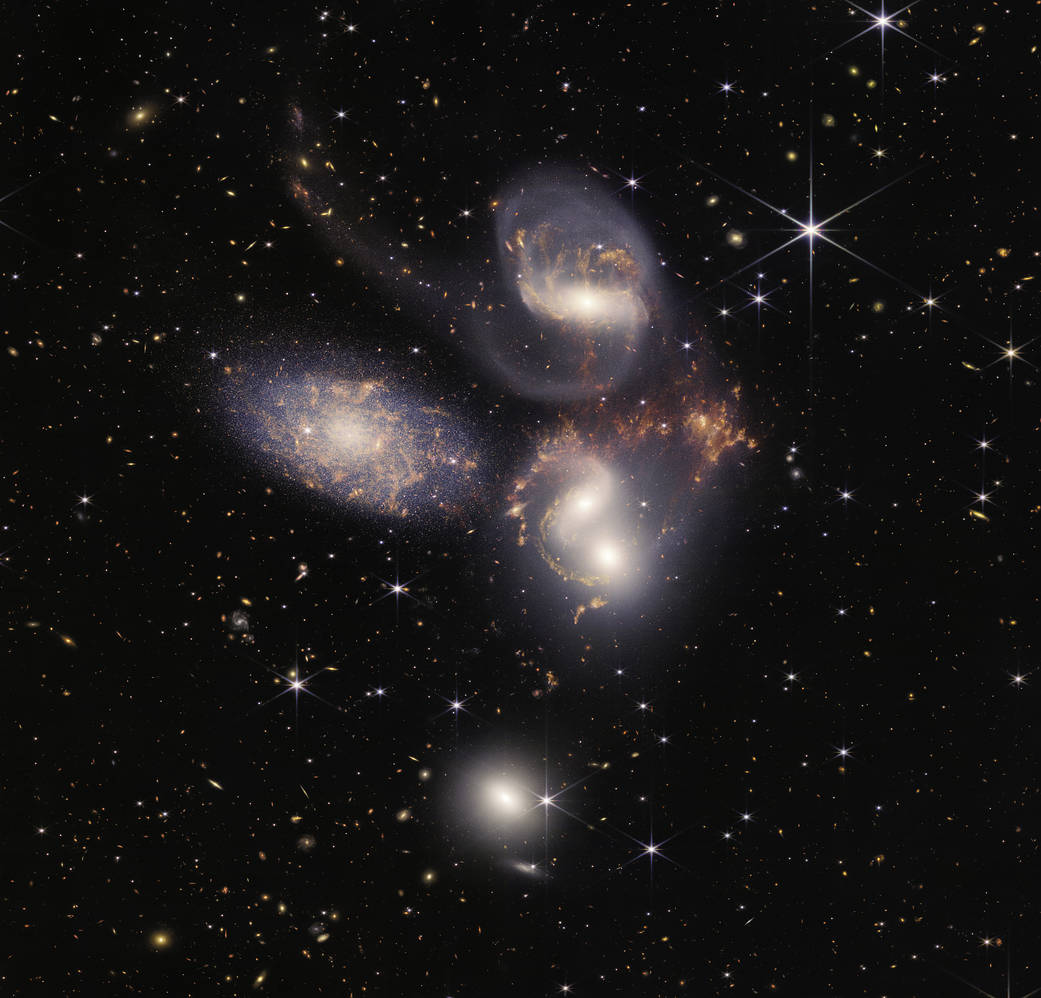
This JWST image is a mosaic of Stephan's Quintet, a group of five interacting galaxies. Webb's infrared view shows detailed spiral arms and starburst regions. The bright pink and purple swirls mark intense star-formation triggered by the galaxies' interactions. Gas and dust are being drawn into curved tails, and high-speed outflows from a central black hole appear as complex wisps.
Telescope: NASA/ESA/CSA James Webb Space Telescope (NIRCam+MIRI).
Full-resolution image: Hubble Heritage Team archive (see download options).
Credit: NASA/ESA/CSA/STScI
5. "Cotton Candy" Nebula in the Large Magellanic Cloud (Hubble Space Telescope)

This image from Hubble's Wide Field Camera 3 shows wispy gas clouds in the Large Magellanic Cloud, a dwarf satellite galaxy of the Milky Way. The colorful "cotton candy" wisps are layers of emission from different gases (hydrogen, sulfur, etc.) in ultraviolet to infrared light. The scene contains thousands of stars and glowing filaments in a turbulent star-forming region.
Telescope: Hubble Space Telescope (WFC3).
Full-resolution image: NASA's Image and Video Library (search for "Large Magellanic Cloud Hubble").
Credit: NASA/ESA/Hubble (C. Murray)
6. The Sombrero Galaxy, M104 (Hubble Space Telescope)

The Sombrero Galaxy (M104) appears as a bright bulge with a dark dust lane, like a broad-brimmed hat. This Hubble image resolves the galaxy's edge-on disk and central bulge in great detail. The bright central core harbors a massive black hole, while the dust ring (seen edge-on) contains stars and dust illuminated by the galaxy's heart.
Telescope: Hubble Space Telescope (ACS).
Full-resolution image: NASA Hubble Messier Catalog.
Credit: NASA/ESA/Hubble Heritage Team
7. Whirlpool Galaxy, M51 and Companion (Hubble Space Telescope)

This Hubble image shows the grand-design spiral galaxy M51 (Whirlpool Galaxy) interacting with its smaller companion, NGC 5195. M51's spiral arms are rich with pink star-forming regions and blue clusters of young stars. The companion's gravitational pull has amplified the spiral structure, making the arms especially pronounced.
Telescope: Hubble Space Telescope (ACS).
Full-resolution image: NASA Hubble Messier Catalog.
Credit: NASA/ESA/Hubble (S. Beckwith/STScI)
8. Orion Nebula (Hubble Space Telescope)
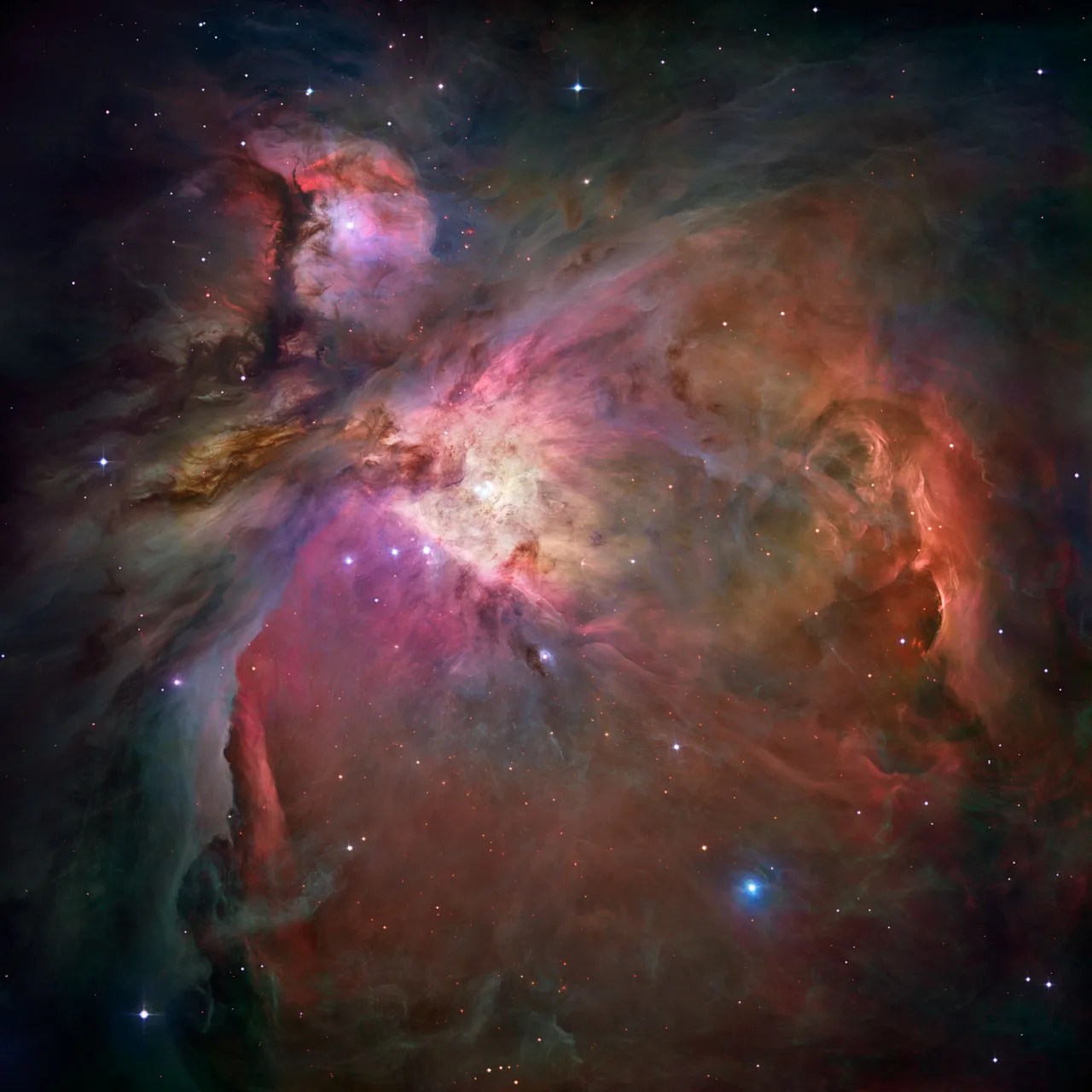
Hubble's sharpest view of the Orion Nebula reveals a colorful cavern of dust and gas where stars are born. Bright blue and green regions mark hot young stars ionizing the gas, while reddish and brown filaments outline cool dust. Over 3,000 stars (some brown dwarfs) are visible in this one mosaic. This "panoramic" image is one of the most detailed ever taken of the Orion star-formation region.
Telescope: Hubble Space Telescope (ACS).
Full-resolution image: NASA Hubble Science Release.
Credit: NASA/ESA/STScI
9. Crab Nebula (Hubble Space Telescope)

The Crab Nebula is the expanding remnant of a supernova observed in 1054 AD. Hubble's mosaic shows a six-light-year-wide cloud of glowing gas and dust. Orange filaments trace the ejected stellar material, while a central neutron star (not directly visible here) powers a turquoise-blue glow from high-speed electrons spiraling in its magnetic field. The colors indicate different elements (oxygen, sulfur, etc.) being bombarded by the pulsar's energy.
Telescope: Hubble Space Telescope (WFPC2).
Full-resolution image: NASA Hubble Release.
Credit: NASA/ESA/Hubble (J. Hester et al.)
10. Webb's First Deep Field (SMACS 0723, James Webb Space Telescope)
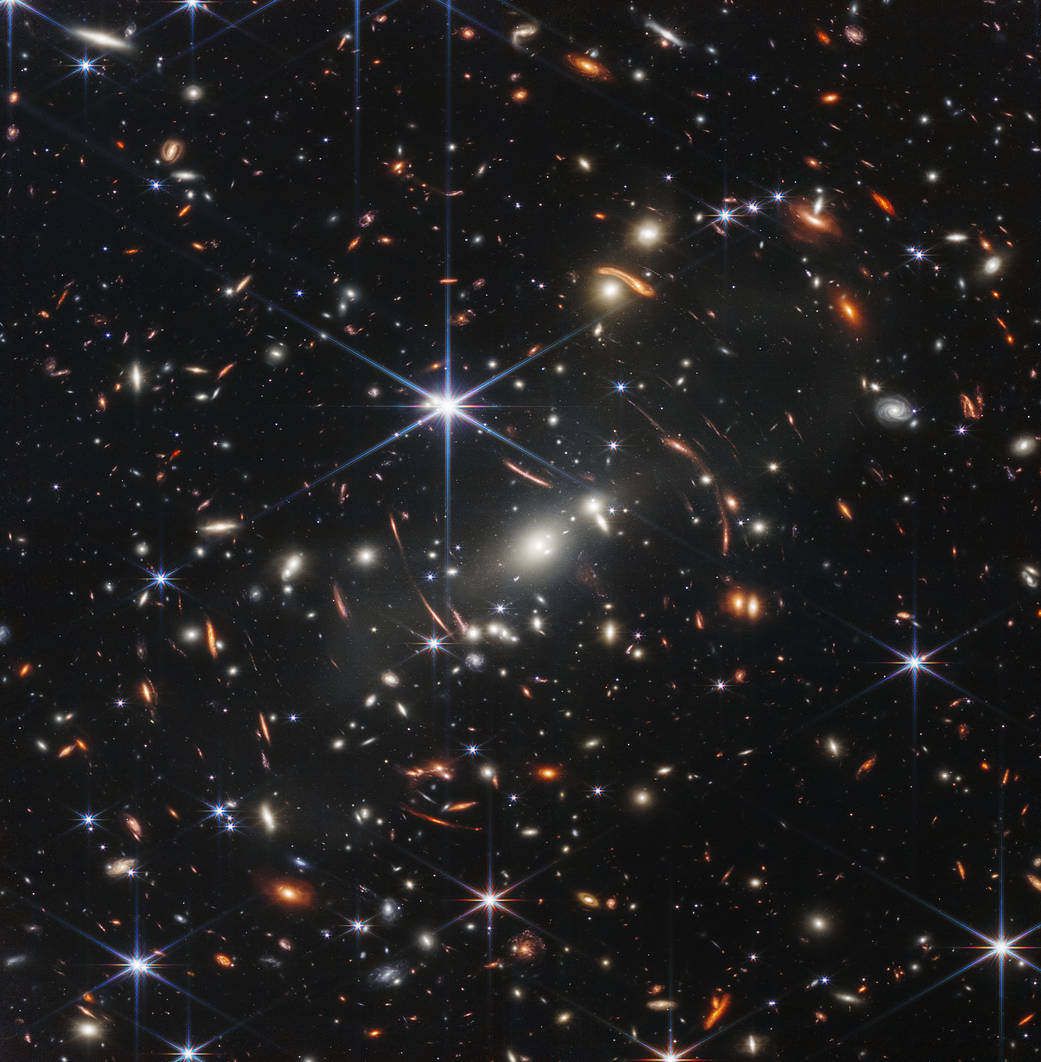
This James Webb Space Telescope image is the deepest infrared view of the universe to date. A massive foreground galaxy cluster (SMACS 0723) acts as a gravitational lens, magnifying over a thousand background galaxies. Thousands of galaxies appear as pinpoints of light (many tinted orange), including the faintest ever seen in infrared. Webb's combined NIRCam exposures reveal structures in these galaxies that were unreachable before.
Telescope: NASA/ESA/CSA James Webb Space Telescope (NIRCam).
Full-resolution image: Hubble Heritage Team archive (see download options).
Credit: NASA/ESA/CSA/STScI
Conclusion
From star-forming nebulae to distant galaxies, NASA's space telescopes continue to transform our view of the cosmos. Each image above combines scientific data with creative imaging to bring the universe closer to the public. Through these observations, scientists learn how stars and galaxies evolve. The importance of space telescopes lies not only in the stunning beauty of their images, but in the knowledge they provide about our place in the universe.