Harvard vs. Trump: What's the Whole Story till Now?

Representative Image
Background: Revocation of SEVP Certification

On May 22, 2025, the U.S. Department of Homeland Security (DHS) revoked Harvard University's certification under the Student and Exchange Visitor Program (SEVP), effectively barring the institution from enrolling new international students. The DHS cited concerns over campus safety, allegations of antisemitism, and purported ties to the Chinese Communist Party as reasons for the revocation.
Homeland Security Secretary Kristi Noem stated that Harvard's leadership had created an "unsafe" campus environment by allowing "anti-American, pro-terrorist agitators" to intimidate Jewish students amid ongoing protests. The administration also accused Harvard of failing to comply with federal requests for student records.

Kristi Noem
Harvard's Legal Response
In response, Harvard University filed a lawsuit on May 23, 2025, challenging the DHS's decision. The university argued that the revocation was "arbitrary, capricious, unlawful, and unconstitutional," asserting that it violated the First Amendment, the Due Process Clause, and the Administrative Procedure Act. Harvard contended that the action was a retaliatory measure against the university's refusal to align with federal demands concerning its governance and curriculum.

Alan Garber
Harvard President Alan Garber emphasized the detrimental impact of the decision, noting that it jeopardized the futures of over 7,000 international students, who comprise approximately 27% of the student body. He stated, "We condemn this unlawful and unwarranted action. It imperils the futures of thousands of students and scholars across Harvard and serves as a warning to countless others at colleges and universities throughout the country."
Temporary Restraining Order Issued

Later on May 23, U.S. District Judge Allison Burrough issued a temporary restraining order, halting the DHS's revocation of Harvard's SEVP certification. The judge determined that allowing the policy to take effect would cause "immediate and irreparable" harm to the university and its students. This order permits Harvard to continue enrolling international students while the legal proceedings are ongoing. A hearing is scheduled for May 29 to consider a preliminary injunction.
Impact on International Students
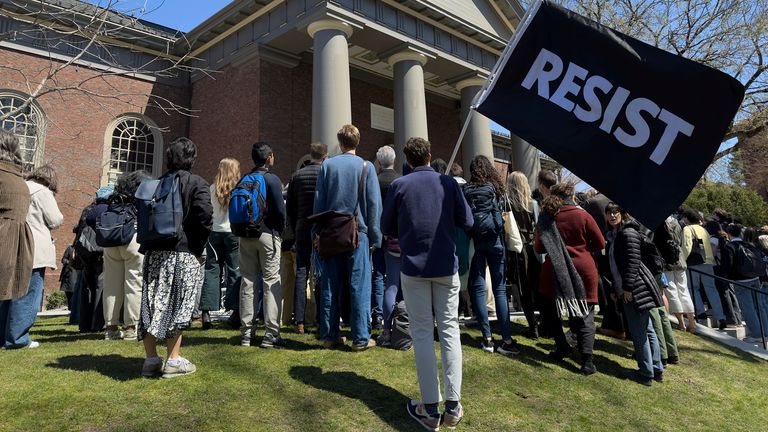
The DHS's action has created significant uncertainty for Harvard's international student population, including approximately 788 students from India. These students, many of whom are enrolled in long-term doctoral or multi-year graduate programs, face potential deportation or the need to transfer to other institutions if the revocation is upheld. The situation has disrupted academic plans and caused widespread concern among affected students.
Royal Student Affected

Among those impacted is Princess Elisabeth of Belgium, the heir to the Belgian throne. The 23-year-old has completed her first year of a graduate program at Harvard. The Belgian Royal Palace has acknowledged the situation, stating that they are monitoring developments to determine the potential impact on the princess's studies.
Conditions for Reinstatement

The DHS has indicated that Harvard can regain its SEVP certification if it complies with six specific conditions within a 72-hour timeframe. These conditions include providing comprehensive records of foreign students involved in campus protests and addressing alleged safety concerns. Failure to meet these requirements could result in the permanent loss of the university's ability to enroll international students.
Broader Implications

The conflict between Harvard and the Trump administration underscores broader tensions regarding academic freedom, immigration policy, and federal oversight of educational institutions. The outcome of this legal battle may set significant precedents for the autonomy of universities and the rights of international students in the United States.